Did you know that advice on how to manage blocked ducts and mastitis have changed over time? As a result you might find people give you conflicting support, so let’s talk about it.
Blocked ducts and mastitis occur when there is inflammation in the breast. During breastfeeding this might be caused by latch problems, a bump to the breast, a sudden change in feeding habits, pressure on the breast from clothes, cushions during feeds, or even a seatbelt!
Inflammation may be noticeable as a sore patch in the breast. You may be able to feel or see a lump, and you may see a red or darker patch on the skin. You may also feel unwell, as though you are coming down with a cold or flu.
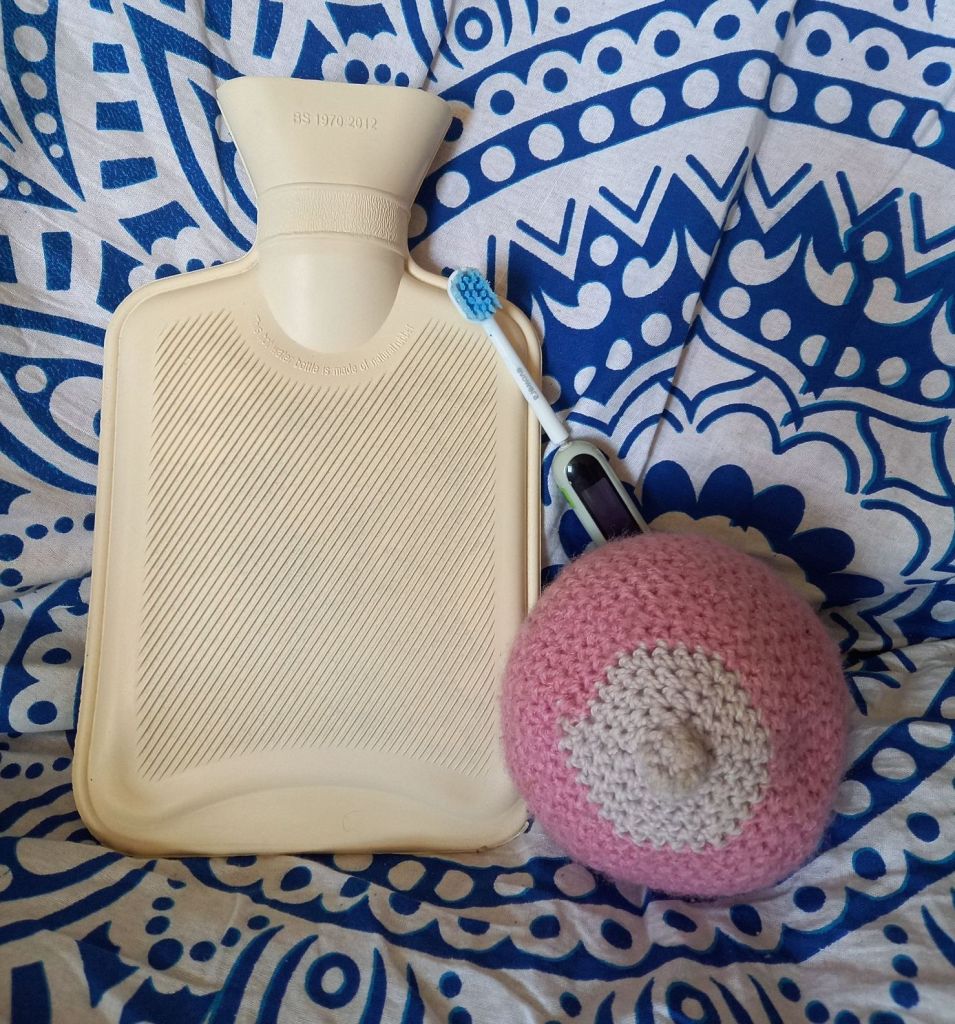
In the past advice for dealing with these problems might have included heat and massage, to try to encourage the trapped millk or blockage out of the breast. You might hear that people used an electric toothbrush, hot water in the shower on the breast, or stroked it with a comb. Many people were also encouraged to remove more milk from that breast. Currently it is believed that these options don’t help reduce the inflammation, and that milk can flow around the blockage to drain without having to go through it.
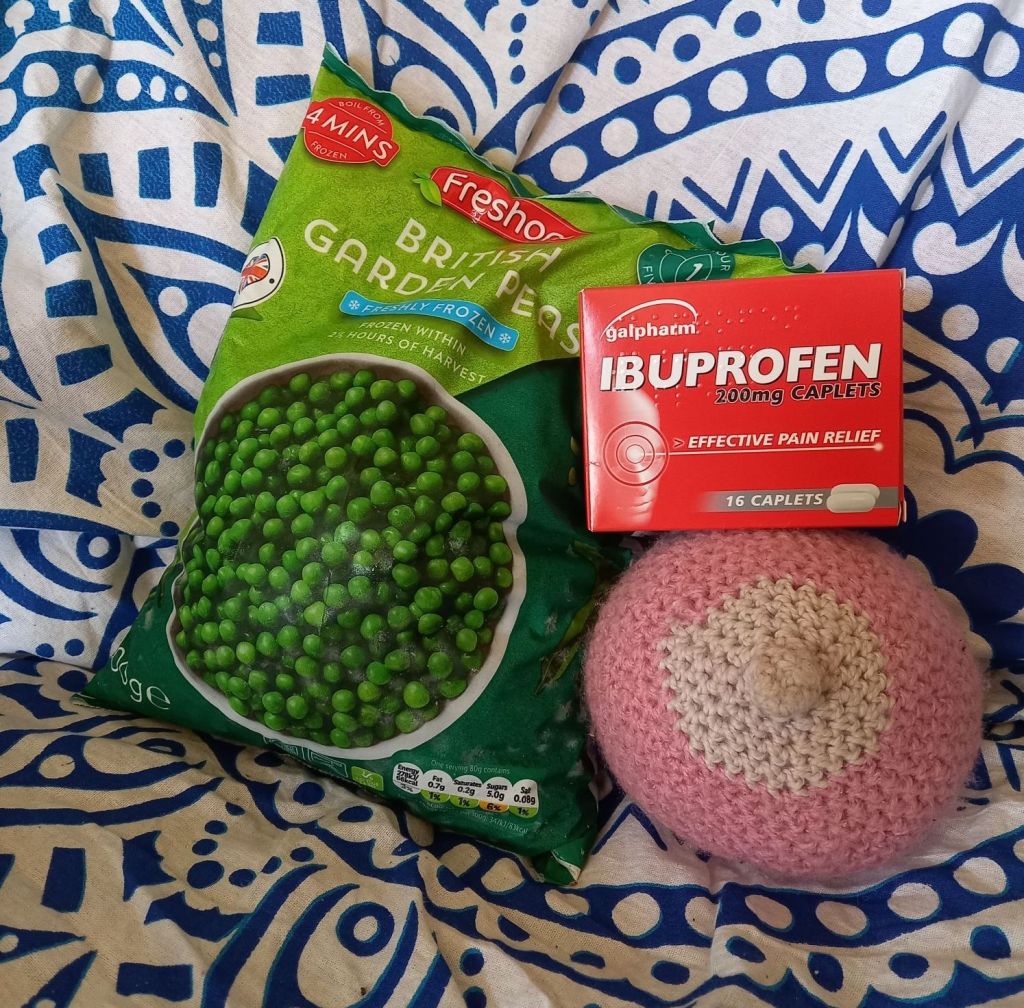
Instead current advice is to use a cooling or ice pack (taking care not to hurt your skin), take an anti inflammatory such as ibuprofen, rest, drink plenty of fluids, and feed your baby as normal. Your milk continues to be safe for your baby. Always check than any medication you take is safe for you and your baby. Breastfeeding and Medication is a good place to start.
If mastitis develps from inflammation into an infection you may need antibiotics. You should contact your GP for help if you develop a temperature or feel unwell, or if the home care mentioned above doesn’t clear things up within a day or two. If you suddenly feel weak or very unwell you should seek more urgent medical attention to rule out sepsis.
If you suffer from recurrent bouts of blocked ducts or mastitis it might be a good idea to get some support from a trained breastfeeding supporter, and you can find a drop in in your area or contact the National Breastfeeding Helpline or LLL helpline.
You can find more guidance on mastitis from this La Leche League page or this Breastfeeding Network page.
 ElizaBirth Doula